

The History of Traditional Thai Dress
Thai clothing’s journey begins with the “chong kraben” (โจงกระเบน), a simple rectangular cloth both men and women wrapped around their lower bodies. This practical garment dominated Thai fashion for centuries. Men wore it mid-thigh length; women extended it below the knee. Class distinctions showed through fabric choice: silk for nobility, cotton for commoners.
The real transformation started during King Chulalongkorn‘s reign (1868-1910). As Thailand modernized, Western influences merged with Thai aesthetics. Stitched clothing replaced wrapped garments among Bangkok’s elite. The monarchy adopted Victorian elements while preserving Thai identity.
The defining moment came in the 1960s when Queen Sirikit recognized Thailand needed distinctive national attire for international diplomacy. She commissioned eight official styles of traditional Thai dress, creating what we recognize today as formal Thai costume. Her vision preserved Thai textile traditions while making sure that the garments suited modern occasions.
Eight Styles of Chut Thai
Formal Traditional Thai Costume Categories
Chakri stands as the most recognizable formal outfit. A single “sabai” (สไบ) drapes diagonally across a gold or silver brocade “sinh” (tubular skirt), leaving one shoulder exposed. This ensemble appears at state functions and wedding ceremonies.
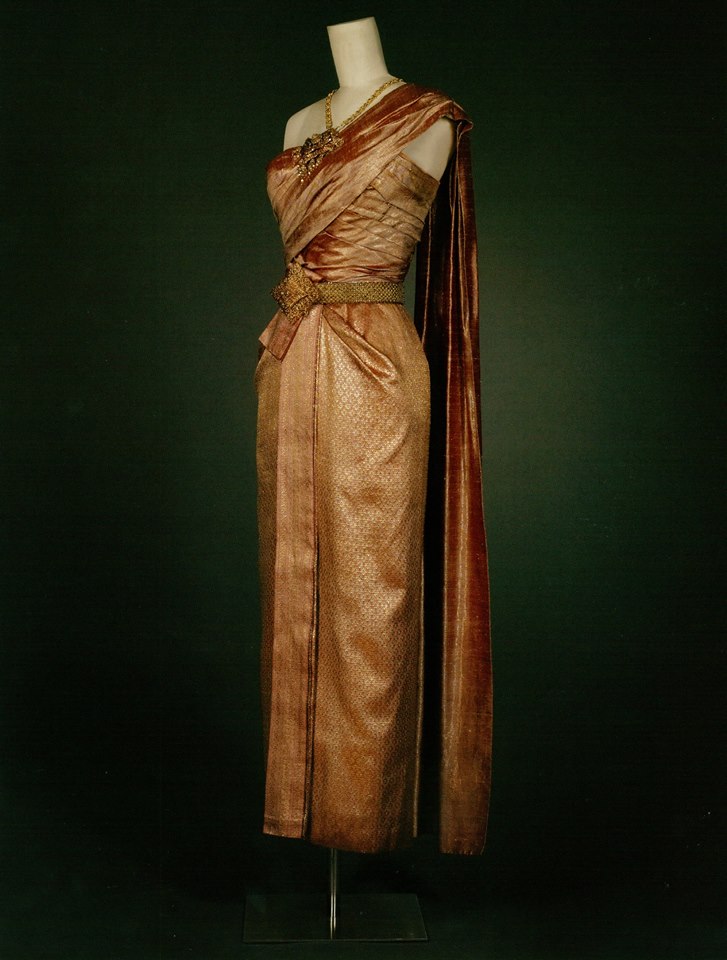
Chakraphat elevates formality with two layered “sabai”featuring intricate embroidery. Reserved for official dinners and royal banquets, it represents Thai elegance at its peak.
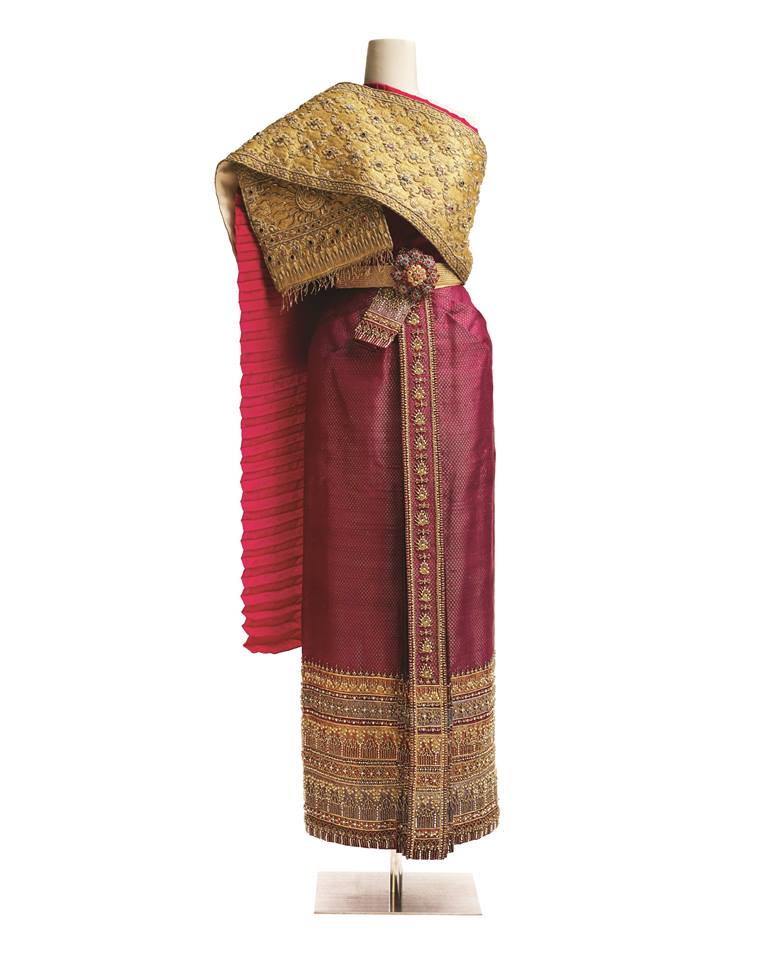
Dusit breaks tradition with its sleeveless design, incorporating Western evening gown elements. Pearl and sequin embellishments decorate the round-necked blouse, paired with pleated gold brocade.
Daily and Semi-Formal Wear
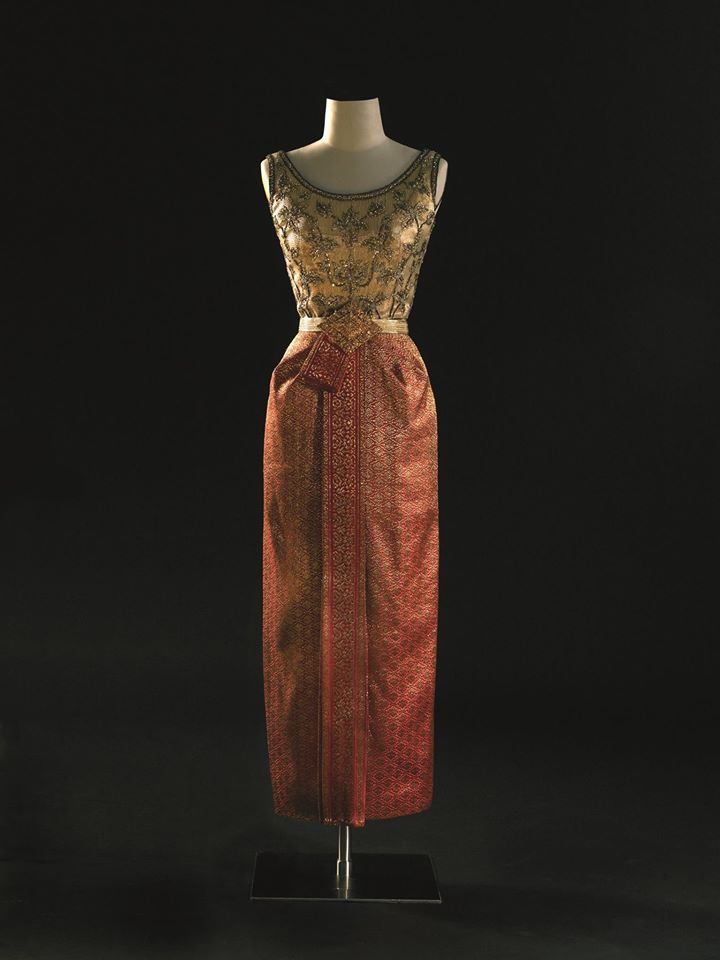
Ruean Ton serves as everyday traditional Thai dress. Its practical button-up blouse with three-quarter sleeves pairs with a striped sinh. Temple visits, religious holidays, and hospitality uniforms commonly feature this style.
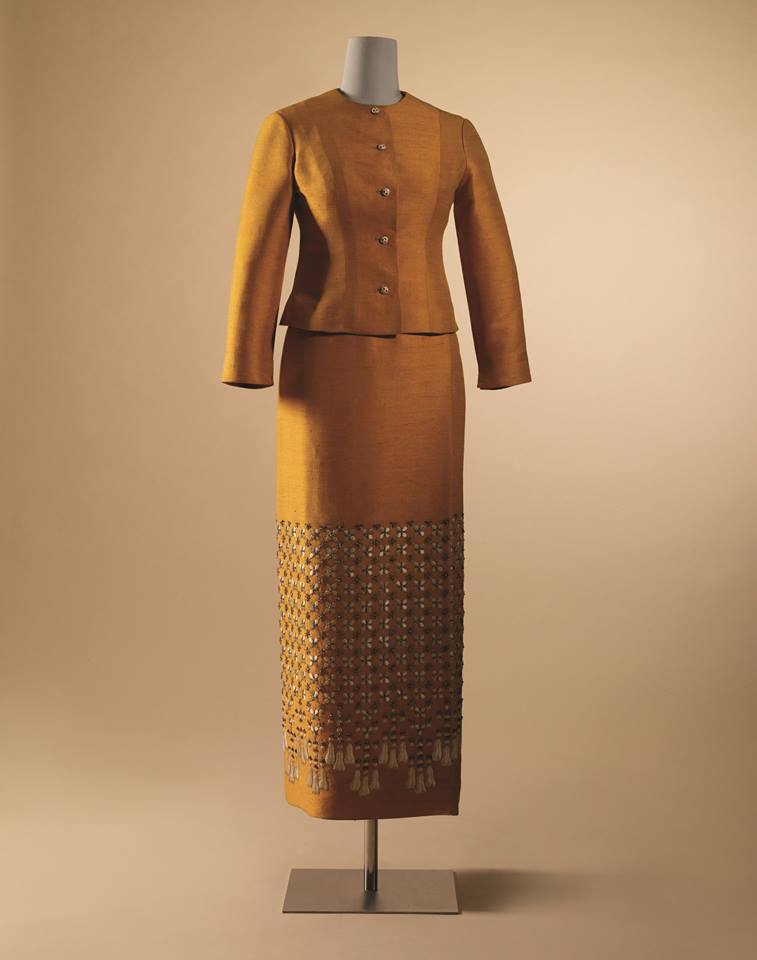
Chitralada adds formality through its standing collar and floral embroidery. The black version serves mourning periods, while colored versions suit daytime ceremonies.
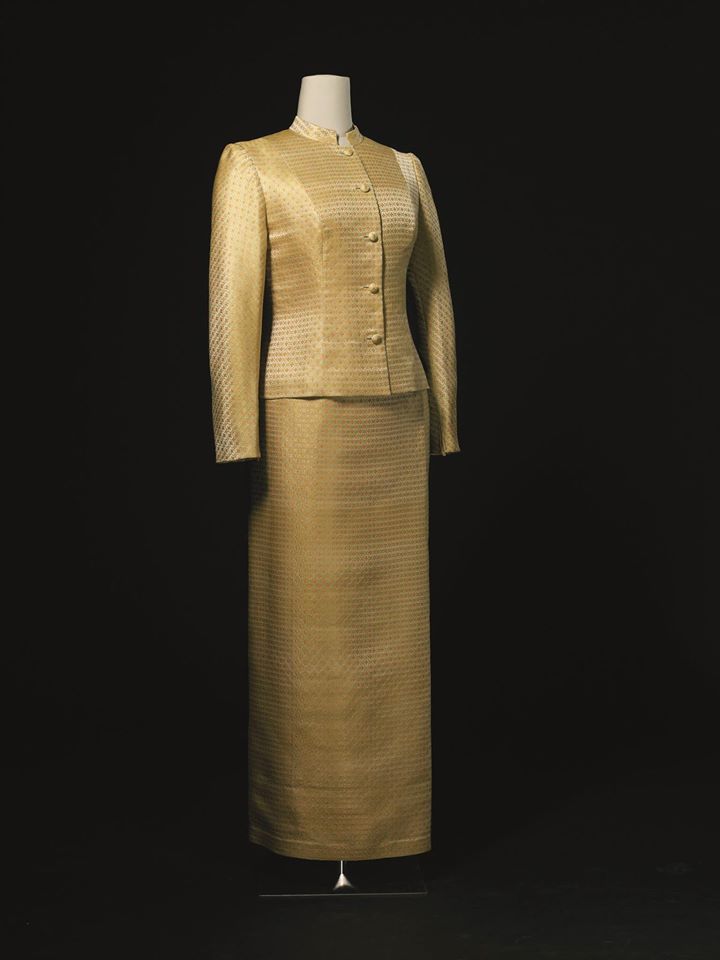
Amarin uses luxurious fabrics with gold thread embroidery, suitable for evening receptions and cultural gatherings.
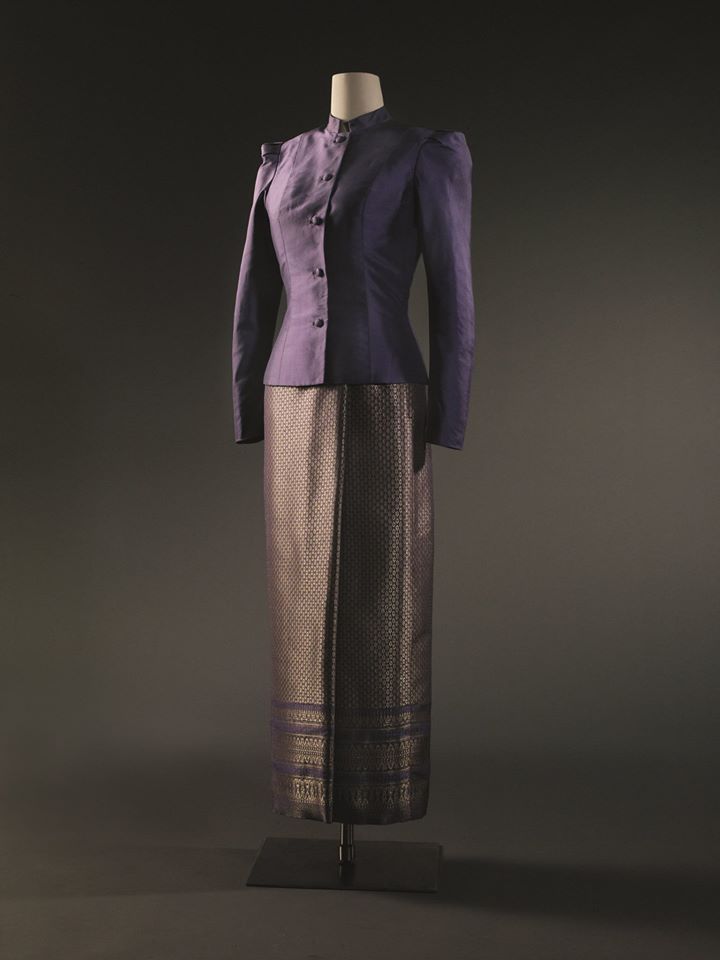
Credit Photo : VIP Thai Silk
Regional Variations
Northern Thailand’s “suea pat” (เสื้อปัด) replaces buttons with fabric ties, reflecting Lanna heritage. Southern provinces showcase Malay-influenced styles like the “banong” (บานง) and “kebaya” (เกอบายา), particularly visible when exploring things to do in Phuket. These regional differences demonstrate Thailand’s cultural diversity beyond the standardized national costumes.
Essential Components of Traditional Thai Costume
Core Garments
The “sinh” (ผ้านุ่ง) forms the foundation, this tubular skirt varies from simple daily wear to elaborate ceremonial pieces. Different regions produce distinctive weaving patterns identifying local origins.
The “sabai” defines formal wear. This silk shawl drapes diagonally, its positioning and fabric quality indicating occasion formality.
The “chong kraben” remains Thailand’s original unisex garment, now primarily seen in classical dance and ceremonies.
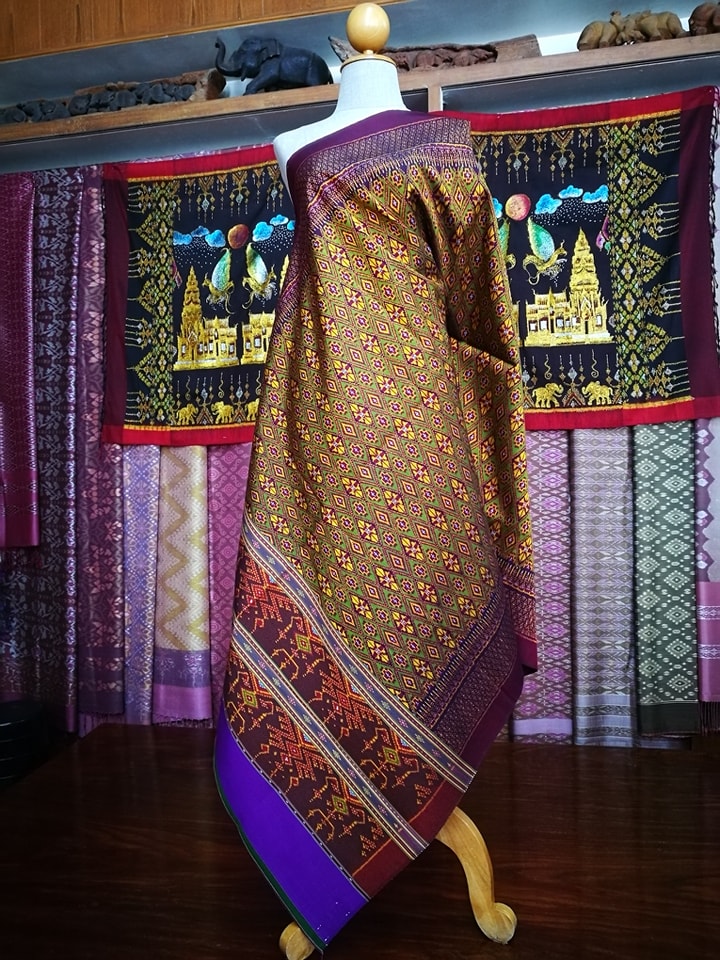
Credit Photo : chobmaisilk.com
The “sabai” defines formal wear. This silk shawl drapes diagonally, its positioning and fabric quality indicating occasion formality.
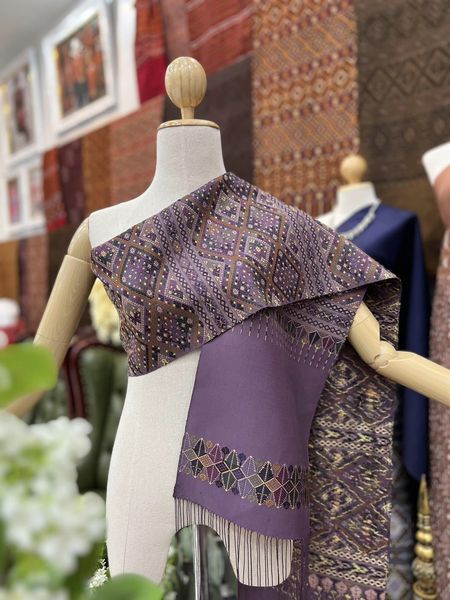
Credit Photo : chobmaisilk.com
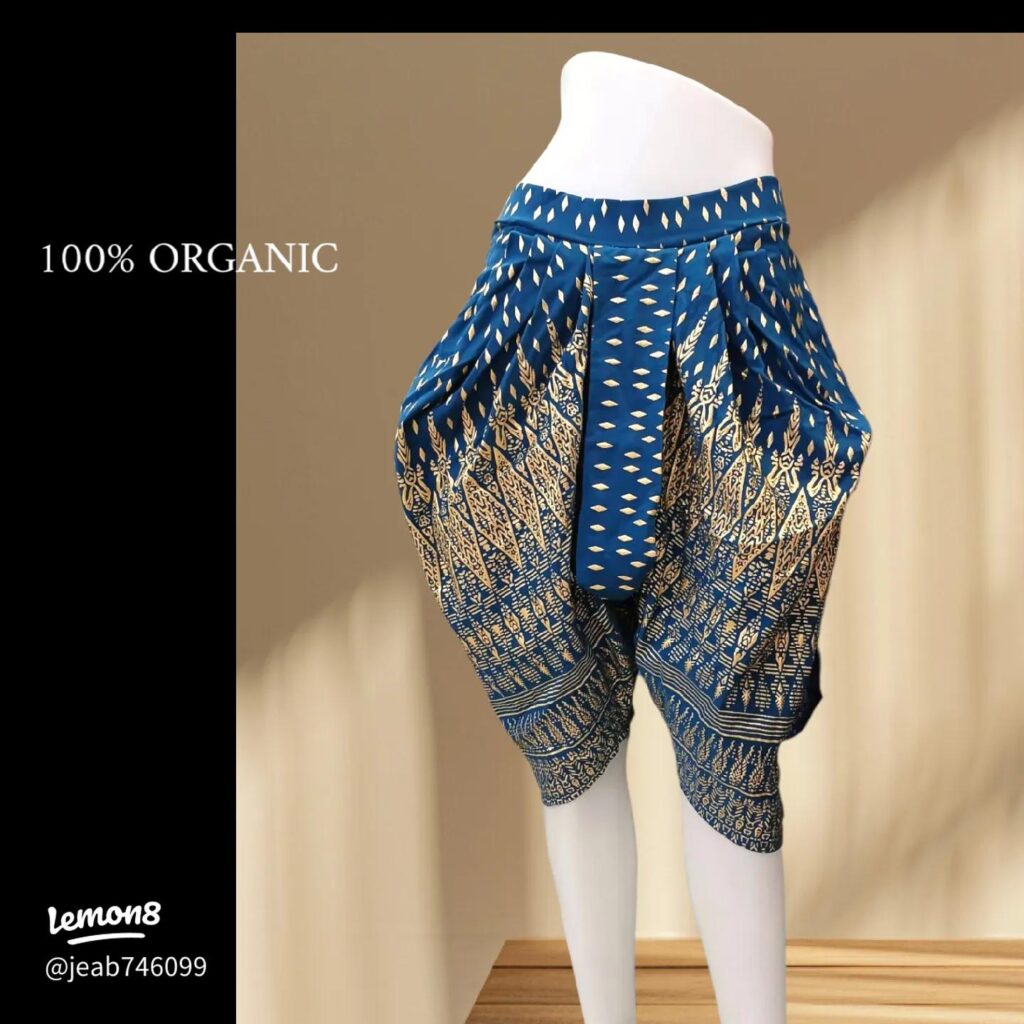
Credit Photo : Lemon8 @jeab746099
Fabrics and Craftsmanship
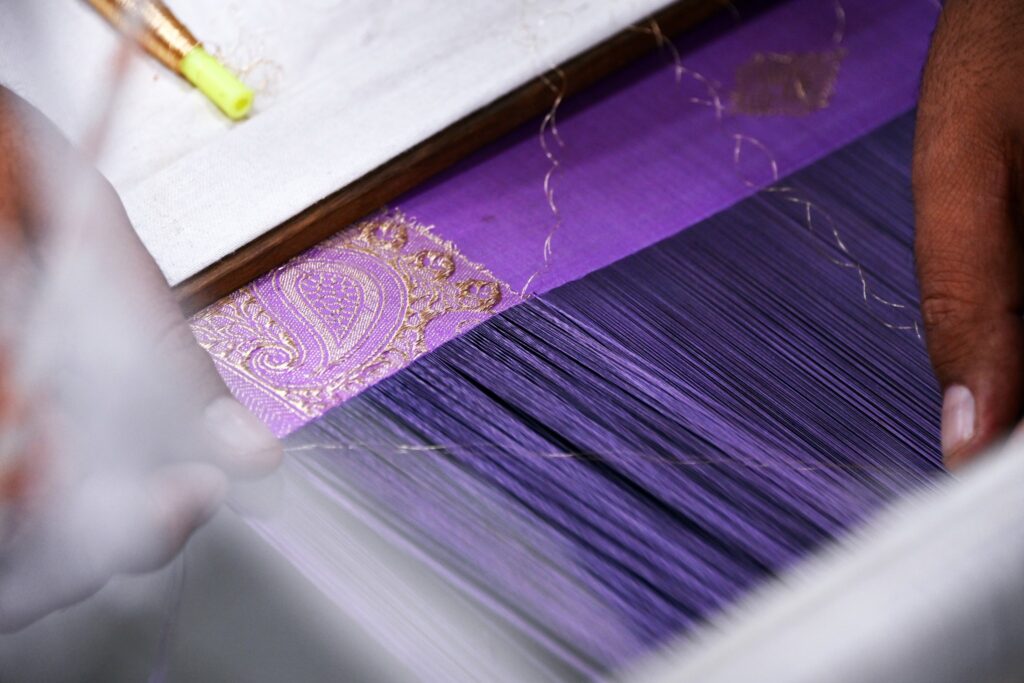
Thai silk dominates formal traditional Thai dress. Hand-woven using generations-old techniques, each piece requires weeks of meticulous work. Silk brocade interwoven with gold or silver threads marks the highest quality garments.
Cotton serves everyday wear, valued for comfort in Thailand’s climate. The SUPPORT Foundation, established by Queen Sirikit, preserves these textile traditions while providing rural communities sustainable income.
Colors and Patterns
In Thai culture, colors are assigned to each day of the week. These associations influence clothing choices for specific occasions.
Patterns range from simple horizontal stripes in casual wear to complex floral motifs requiring months of weaving. Each region maintains signature designs passed through generations.
Cultural Significance and Modern Relevance of Thai Dress
Ceremonial Usage
Religious ceremonies mandate modest traditional clothing. Weddings feature brides in Chakri or Boromphiman styles. Government functions require officials to wear formal Thai dress on specific days.
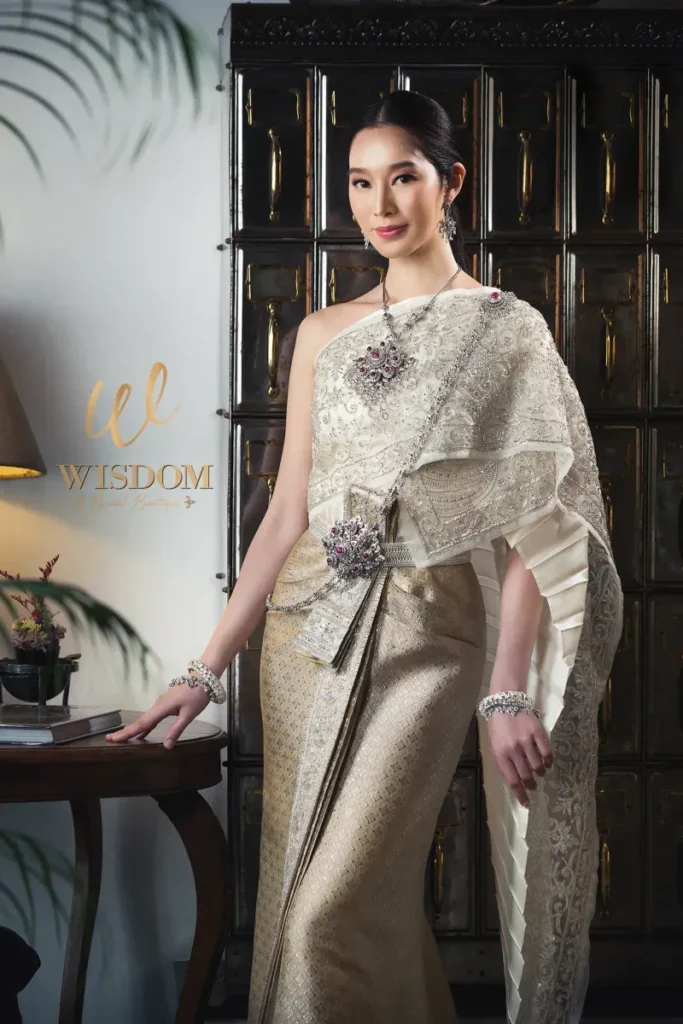
Credit Photo : Wisdom Bridal Boutique
Symbolic Elements
The exposed shoulder in formal styles demonstrates respect through deliberate vulnerability. Gold thread connects earthly and divine realms. The sarong is pleated in front in a fashion known as “jeeb chai pok” (จีบชายพก), which showcases technical skill and social refinement.
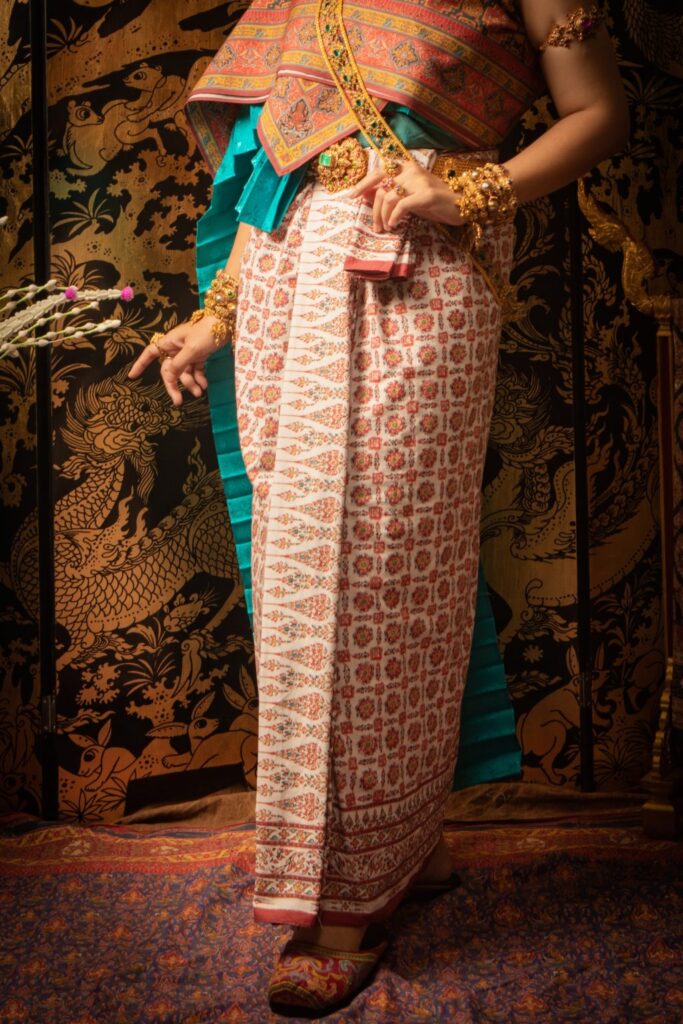
Credit Photo : THAI STYLE STUDIO
Contemporary Revival
Young Thais increasingly embrace traditional Thai costume for graduations, cultural festivals, and social media content. Fashion designers incorporate traditional elements into modern collections. Hotels and airlines adapt traditional styles for uniforms, particularly visible at Phuket attractions.
Experience the Authentic Thai Outfits in Phuket
Witnessing traditional Thai costume in motion reveals its true magnificence and genius. These garments are the living art that flows with movement and tells stories through every type of fold and pattern.
Siam Niramit Phuket brings these Thai costumes to life through spectacular cultural performances. Our Phuket show features hundreds of authentic traditional outfits representing every region and historical era. As one of the essential things to do in Phuket, you’ll see how traditional Thai dress transforms from static beauty into dynamic cultural expression, making it an unmissable addition to your Phuket attractions itinerary.
Book your tickets to our cultural Thai show here.